%25201200x675%2520pixels%2520(3)-1.webp&w=3840&q=75)
How long does the first period last? Here's what to expect
Your first period is here and you're counting the days? Find out how long it can last and what to expect from your first few cycles.
When your first period finally arrives, it can bring a lot of questions, too. What happens now?
Maybe you're looking at the calendar and wondering, “How many days will this last?” You might also be wondering whether what you're experiencing is normal. If those questions are on your mind, you're in the right place. You don't have to figure everything out all at once.
Your first period, also called menarche, is a new experience for your body. So it's completely normal to have questions about bleeding, cramps, how long your period will last, and even when your next period might come. Let's figure it out together.
How long does the first period last?
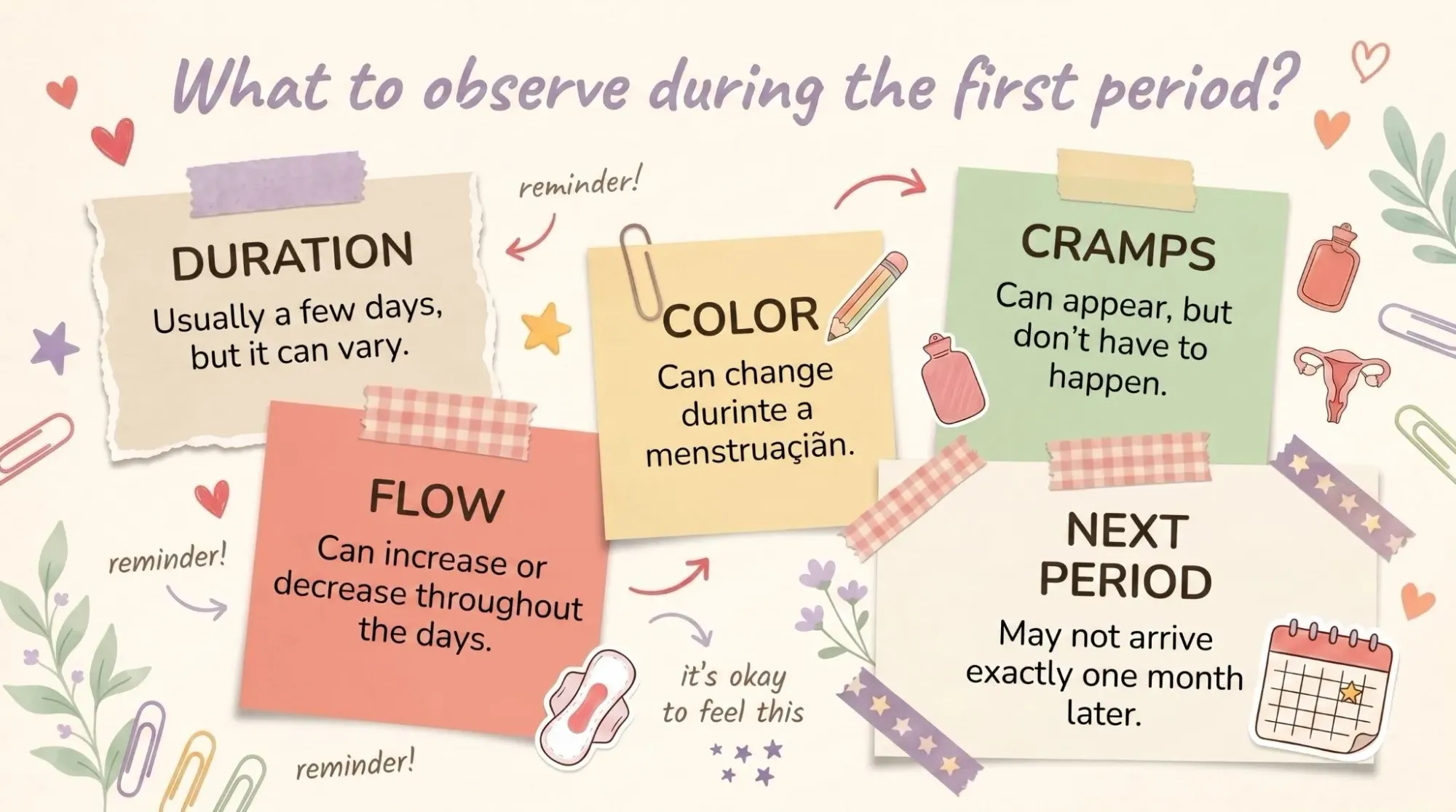
In general, a period lasts between 3 and 7 days. But that doesn't mean yours has to follow that exact timeline, especially when you're having your first period. When your body is just starting to menstruate, some variation is expected.
If you're counting the days and notice that your flow is changing, for example, there's no need to panic. Bleeding can be heavier at first and become lighter later, or it can vary throughout your period.
The important thing is to pay attention to how you're feeling and notice how your body responds during your period.
Can the first period be different from the next ones?
It can. Getting your first period doesn't mean your menstrual cycle has settled into a regular pattern yet. During puberty, your body is still going through hormonal changes, so your first few cycles may look a little different from one another.
Your flow can also change from one period to the next. This is especially common during the first few years after menarche, while your body is still maturing.
So, try not to use another girl's period as a way to measure yours. Every body has its own rhythm, and paying attention to your own changes can help you understand your cycle better.
And after the first period, when does the next one come?
If you're thinking your next period will show up exactly one month later, you might be surprised. During your first few cycles, your body is still developing, and it can take some time for your cycle to settle into a more regular pattern.
That means your second period might come after a different amount of time than you expected. The cycles that follow can vary, too. Keeping track of the dates can help you notice how your body is changing from month to month.
You can write down the first day of each period on a calendar or in Soso. That way, it's easier to keep track of your cycle and have those dates handy if you ever want to talk to a trusted adult or healthcare professional.
If a lot of time passes between periods, your bleeding is very heavy or lasts a long time, or you're experiencing severe pain, tell a trusted adult. Together, you can decide whether it's a good idea to talk to a healthcare professional.
ASK QUESTIONS WITH SOSO AI | When will my next period be?
How do I know if my first period is normal?
If you're trying to figure out whether everything is okay, don't look only at how many days your period lasted. Pay attention to your flow, cramps, and any changes that feel unusual to you, too. These details can help you understand how your body is adjusting as you start getting your period.
You can keep track of a few simple things during and after your period:
- How many days the bleeding lasted;
- Whether your flow got heavier or lighter throughout the days;
- Whether you had cramps and how they made you feel;
- Any changes that caught your attention;
- When your next period started.
There's no single way to have a period. Keeping track of these details can help you get to know your own pattern over time. And if something worries you, talk to your mom, dad, or another trusted adult.
Is it normal for the first period to last more than 7 days?
If you've made it this far counting the days and noticed that your period has lasted more than a week, take a breath. I know that when you're experiencing your first period, anything unexpected can make you feel a little nervous. You're still learning how your body works, after all.
In general, a period lasts between 3 and 7 days. But your body didn't come with a calendar telling you exactly how everything should happen. Some variation can happen at the beginning, and how long you bleed is only one part of the picture.
If your bleeding continues for more than 7 days, is very heavy, or comes with heavy flow, cramps, severe pain, or extreme fatigue, or another symptom that's worrying you, don't keep that question to yourself. Tell your mom, dad, or another trusted adult so you can get the help you need.
And remember: you don't have to figure out what's normal on your own. Asking questions, talking about how you're feeling, and asking for help are all part of learning how to take care of your body.
The first period does not need to follow a perfect calendar
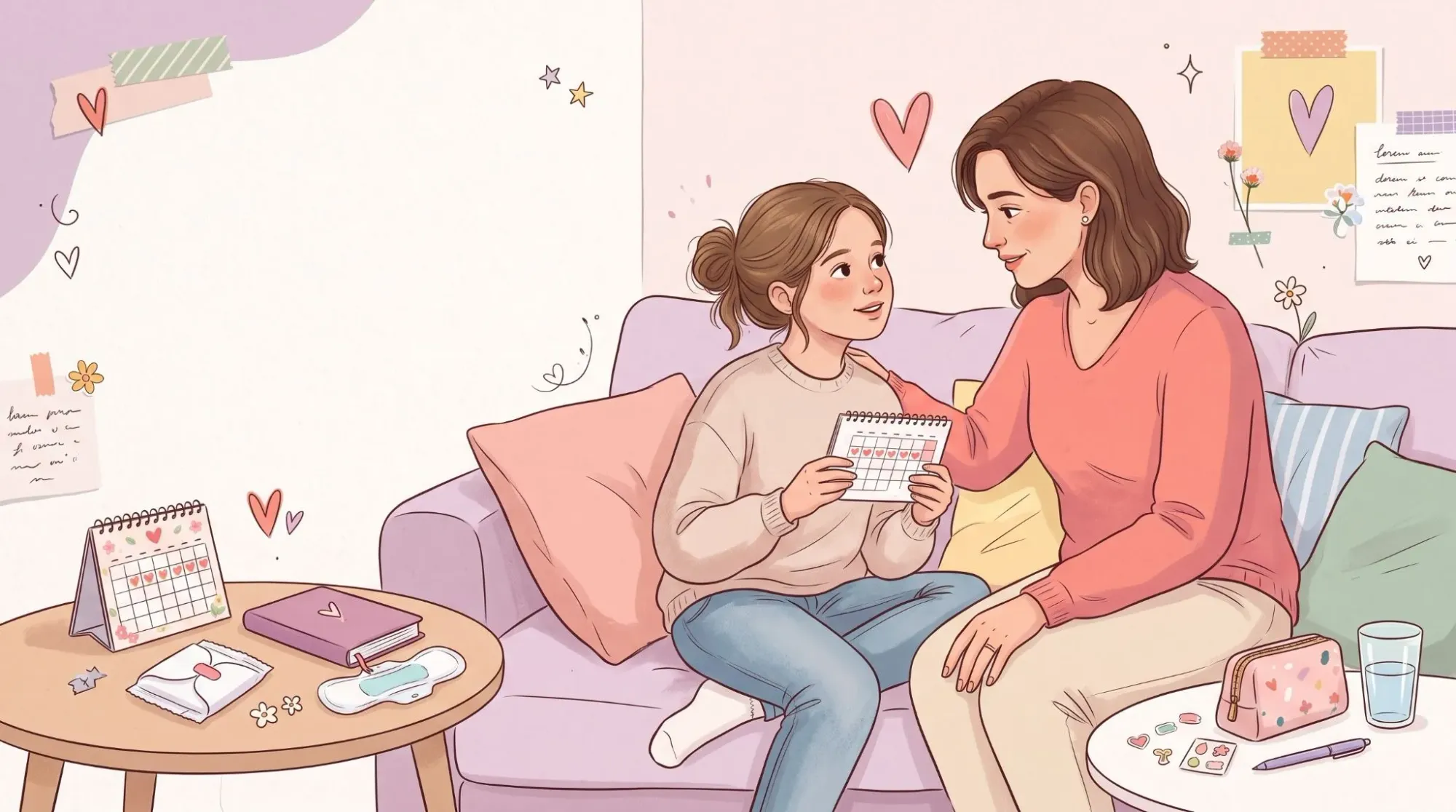
Your first period is a new experience, and it can come with a lot of questions. It's completely normal not to understand everything that's happening yet or to feel a little unsure.
You're getting to know a new part of your body. Over time, you'll start to notice what your flow is like, how long your period usually lasts, whether you get cramps, and what your next few cycles are like. You don't need to have all the answers during your first month.
And when a question comes up, talk about it. You can ask your mom, dad, someone in your family, another trusted adult, or even Soso.
Your period isn't a secret, and it's nothing to be embarrassed about. The more you understand your body, the more confident you'll feel taking care of it.
Soso was created to be there for you during this stage, with information about periods, puberty, and all those questions that can come up as your body starts to change.
Download Soso and get to know your cycle at your own pace. Understanding your body can be a lot simpler and completely drama-free.
Comments (0)

Veronica Tarsitano is a nursing student and a Brazilian living in Portugal. Married and a mother of three, including the girl who inspired the name "Sosô". She writes based on the real-life experience of closely following a daughter's first period, without filters.
Download the Soso app and put this into practice
Download the appRelated Posts
%25201200x675%2520pixels-1.webp&w=3840&q=75)
First period during a vacation trip: how to pack the perfect bag
Going on vacation with your daughter as she enters puberty? Besides clothes and travel documents, a few simple items can make all the difference if her first period happens during the trip.
%25201200x675%2520pixels%2520(54)-2.webp&w=3840&q=75)
Is it normal for your period not to come in the second month?
If your daughter got her first period and then nothing happened the following month, I can imagine the question that may have crossed your mind: “Could something be wrong?”
%25201200x675%2520pixels%2520(48)-1.webp&w=3840&q=75)
Weekend with Dad: How He Can Support His Daughter During Her Period
She doesn’t expect you to know everything about periods. But she’ll feel much safer knowing she can count on you.