
%25201200x675%2520pixels%2520(54)-2.webp&w=3840&q=75)
Is it normal for your period not to come in the second month?
If your daughter got her first period and then nothing happened the following month, I can imagine the question that may have crossed your mind: “Could something be wrong?”
It’s comprehensible. After all, we spend months preparing for that first period, and when it finally happens, it seems natural to expect the next one to arrive around the same time.
But that is not necessarily how it works. During the first few years after the first period, the body is still adjusting to the changes of puberty. Because of this, the menstrual cycle can be irregular, and a period may not come every month like clockwork.
So, if this happened to your daughter, take a breath. Going a month without a period does not always mean that something is wrong.
Of course, that does not mean we should ignore every change. What I want to show you is exactly that difference: what can be part of normal development and when it is worth talking to a healthcare professional.
Is it normal for your period not to come in the second month?
It can be, yes. And this is one of the first things I would like you to know: if your daughter has just had her first period, her body is still learning how to work through this new cycle.
The first period, also called menarche, does not mean that the body has already established a regular menstrual cycle.
During puberty, many hormonal changes take place, and cycles can vary quite a bit. Sometimes, a period may come after a few weeks. In other situations, it may take longer.
So, if your daughter had her first period but did not have another cycle in the second month, there is no need to immediately assume that something is wrong. It is worth tracking the next few cycles and paying attention to how her body behaves.
And here is a mom tip: don't turn the calendar into a source of anxiety. Tracking is important, but constantly counting the days and waiting for the next period can make both you and your daughter more worried than you need to be.
READ MORE ABOUT OUR EXPERIENCE: Our daughter got her first period at age 10. Here is what I wish we had known before.
Why can periods be irregular during adolescence?
Adolescence is a time full of new experiences. Your daughter is growing, her hormones are changing, her body is developing new characteristics, and in the middle of all of that, her menstrual cycle is also beginning to find its rhythm.
That is why, when we talk about an irregular menstrual cycle during adolescence, we need to remember that we are talking about a body that is still developing. We cannot expect it to work exactly like an adult woman's body.
This does not mean that every irregularity is normal. It simply means that, especially during the first few years after the first period, some variation can happen.
Other factors can also affect the cycle
Besides the changes that naturally happen during puberty, other factors can also affect menstruation.
Significant changes in routine, stress, inadequate nutrition, very intense exercise, and significant changes in weight, for example, can be associated with changes in the menstrual cycle.
But be careful not to turn this list into an investigation at home. If your daughter's period is late, it does not automatically mean that she is stressed, eating incorrectly, or that something is wrong.
The best approach is to look at the whole picture. How is she feeling? Has anything important changed recently? What were her previous cycles like? Is there any other symptom? If something is worrying you, talk to a healthcare professional.
READ MORE | Why Am I So Tired? Period-Related Fatigue in Girls
How does the menstrual cycle work during the first few years?
This is another thing that can be confusing for us. We often learn that the menstrual cycle lasts 28 days and end up assuming that every girl should get her period within that timeframe.
But 28 days is only a reference point. Cycles can vary from person to person and can also change throughout adolescence.
To track your daughter's cycle, you can start with the basics: the first day of bleeding is the first day of the cycle. When a new period begins, a new cycle starts.
You do not need to turn period tracking into a spreadsheet or try to remember everything from month to month. What matters most is having a simple and organized place to record this information.
Soso helps with exactly that. Through the app, your daughter can track her cycle and record symptoms, feelings, and other things she notices throughout the month. Instead of relying on paper and pen or scattered notes that can easily get lost, she can keep this information organized in one place.
And this is what that tracking looks like inside Soso:
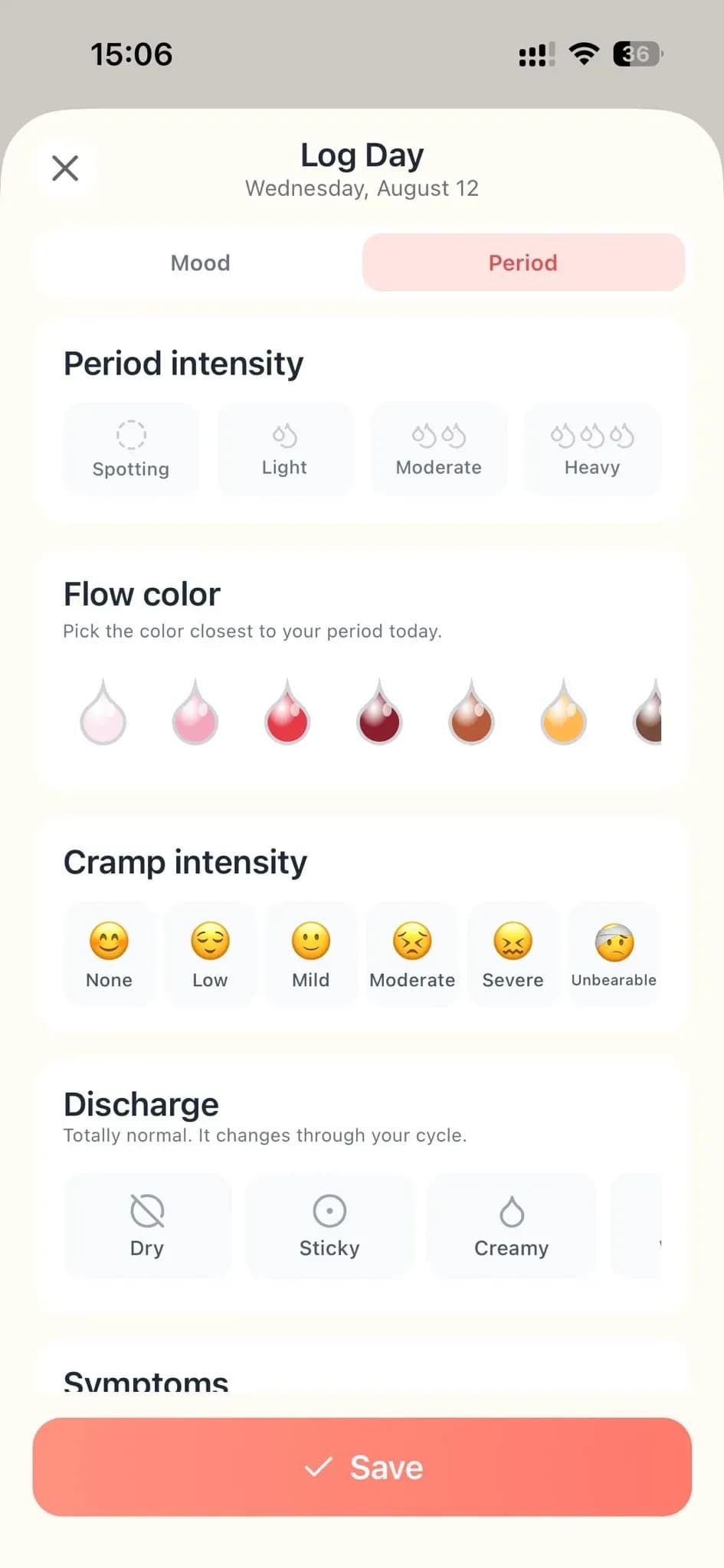
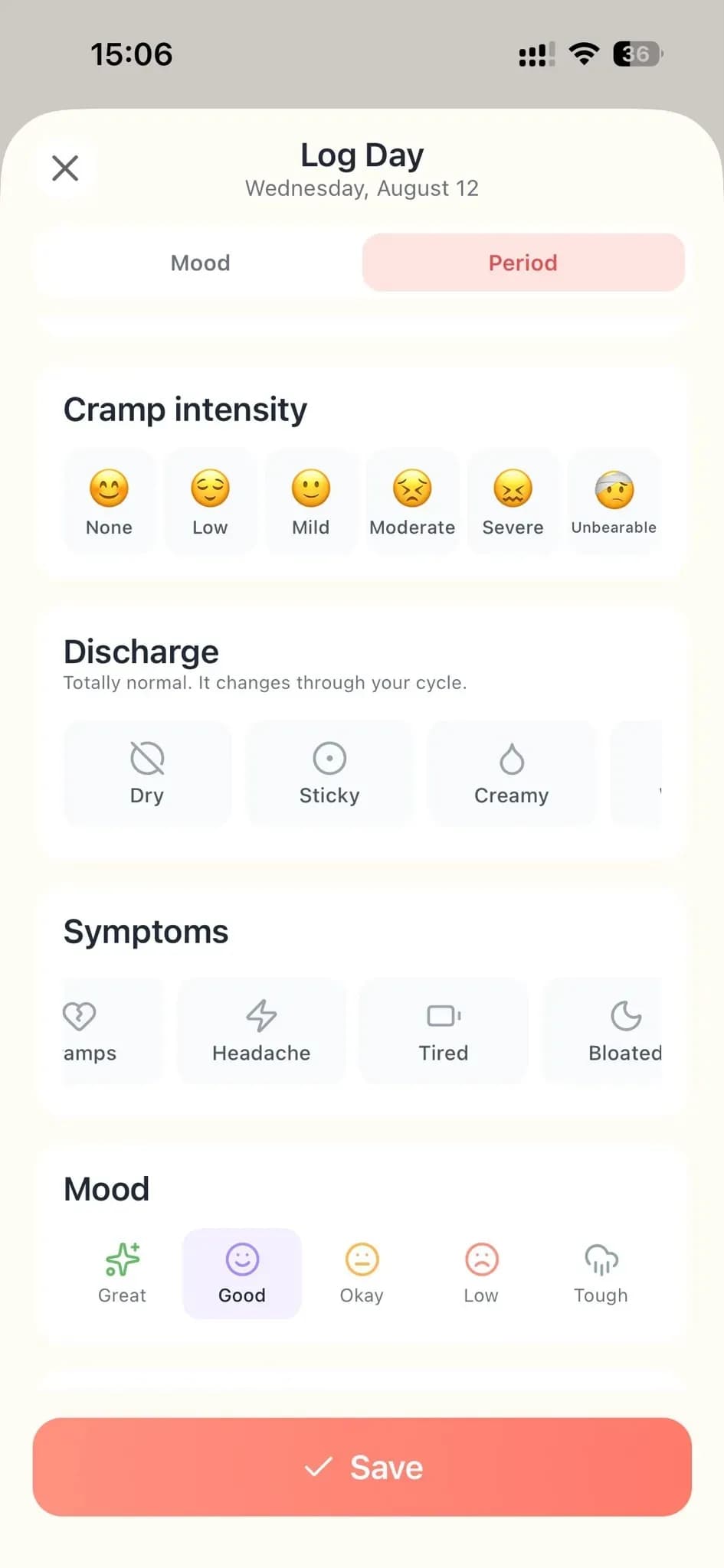
Having everything organized in the app makes it easier to look at the cycle as a whole and notice how your daughter is feeling over time. She can check her own records and, if she wants to, share this information with you.
It can also be helpful when questions come up. Instead of trying to remember when her last period was or which symptoms she experienced in previous months, you have those records available whenever you need them.
And there is an important difference: tracking does not mean monitoring. The goal is to help your daughter understand her body and recognize its signals with more confidence and independence, in a simple way and without turning every change into a reason for concern.
IS THIS YOUR QUESTION TOO? This app is for girls, not adults, like ovulation and pregnancy, right?
Is going two months without a period something to worry about?
This is probably the question that brought you here. And the answer needs to be a careful one.
Going for a longer period without menstruating can happen during adolescence, especially during the first few years after the first period. So, we cannot look at just one month without a period and conclude that something is wrong.
At the same time, I do not want to simply tell you "it's normal" and leave you without knowing what to look out for. There are situations in which irregularity is worth discussing with a pediatrician, gynecologist, or another healthcare professional.
When is it worth talking to a healthcare professional?
If something is worrying you, you do not have to wait to seek guidance.
Sometimes, simply talking to the professional who follows your daughter's health is enough to understand whether the situation is expected for her age and stage of puberty.
It is especially important to pay attention if there is:
- a prolonged absence of menstruation;
- very heavy bleeding;
- bleeding that lasts a long time;
- very severe pain;
- changes that continue to happen;
- other symptoms that are worrying you or your daughter.
And here is another important thing: do not be afraid to ask questions. There is no such thing as a silly question when we are talking about our children's health. If you are unsure, bring your questions to a healthcare professional.
How can you track your daughter's period?
When my daughter started entering this phase, one of the things I realized was that tracking does not have to mean controlling. In fact, it can be a beautiful opportunity to teach a girl to pay attention to her own body.
You can write down when her period starts, what the flow was like, whether she had cramps, how she was feeling, and any other symptom she wants to record. Over time, this information can help you see her cycle more clearly.
That is exactly the idea behind Soso. The app was designed for girls and teenagers to have an age-appropriate space to record their cycle, symptoms, moods, and feelings.
And for us, as parents, this can also become a doorway to conversation. Instead of asking only “Did you get your period?”, we can ask “How are you feeling?”. It may seem like a small change, but it can open the door to a much bigger conversation.
How can you talk to your daughter about an irregular cycle?
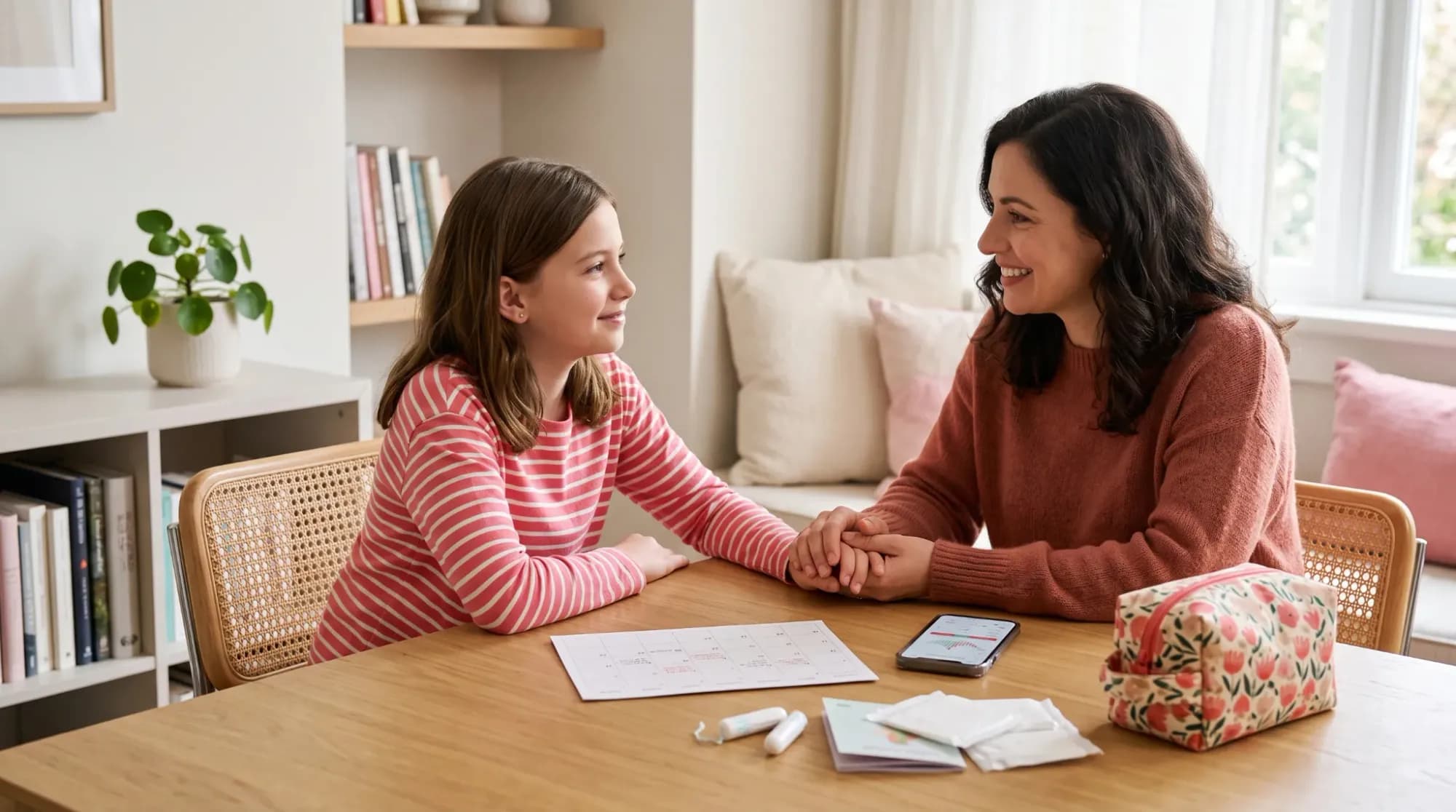
If there is one thing I have learned during this stage, it is that the way we talk to our daughters makes a big difference.
When her period does not come, you may feel worried. But imagine what this can feel like for a girl who is still trying to understand all these changes.
She may think that something is wrong with her or even feel embarrassed to talk about it.
That is why I suggest starting with reassurance. Instead of repeatedly asking when her period is going to come again, you can simply say: “Your body is going through a lot of changes. Let's keep track together, and if anything worries us, we can ask for help.”
You do not need to have one big conversation. You do not need to know how to explain everything at once. Often, the best conversations happen little by little, when she asks a question and realizes that you are there to answer.
And what if you do not know the answer? That is okay. I do not think we need to know everything either. We can look for information together, talk to a doctor, and show our daughters that taking care of their bodies also means asking questions.
The most important thing is to keep track, not panic
An irregular menstrual cycle during adolescence can be part of the body's development, especially during the first few years after menarche.
What we need to do is keep track without turning menstruation into something to fear.
Talk to your daughter, keep track of her cycles, write down whatever seems useful, and seek professional guidance when something feels different or concerning.
And, most importantly, remember that your daughter is learning. Just as she is discovering her own body, we are also learning how to support our daughters through this new stage as parents.
At the end of the day, perhaps our most important role is simply to explain, listen, support, and show her that she never needs to feel ashamed to ask questions about her own body.
If you want to help your daughter start tracking her cycle in a gentle way, Soso can be part of that journey.
It is a space designed to help girls better understand their cycle, record symptoms and feelings, and gradually build a more comfortable relationship with their bodies.
Download the Soso app and help your daughter get to know her body with more confidence, information, and support.
This content is for educational purposes only and does not replace individual evaluation, diagnosis, or guidance from a healthcare professional. If you are concerned about your daughter's cycle or any symptoms she is experiencing, talk to a pediatrician or gynecologist.
Frequently asked questions about irregular periods during adolescence
If you still have questions, let's go straight to some of the questions that often come up when we talk about irregular periods during adolescence.
Is it normal to go two months without a period during adolescence?
It can happen, especially during the first few years after the first period, because the menstrual cycle is still developing. However, this does not mean that every period of time without menstruating should automatically be considered normal. If the absence is prolonged, happens repeatedly, or comes with other symptoms, it is worth talking to a healthcare professional.
How long can periods remain irregular after the first one?
There is no single timeline that applies to every girl. It can take some time for the menstrual cycle to develop a more predictable pattern, and cycles can vary considerably during the first few years after menarche. That is why it is better to track your daughter's cycles instead of expecting them to happen at exactly the same interval every month.
When should irregular periods during adolescence be a concern?
When there are very long intervals between periods, persistent changes, very heavy bleeding, severe pain, or other symptoms that concern the family, it is important to seek professional guidance. A healthcare professional can evaluate the situation based on the girl's age, development, menstrual history, and other factors.
Comments (0)

Veronica Tarsitano is a nursing student and a Brazilian living in Portugal. Married and a mother of three, including the girl who inspired the name "Sosô". She writes based on the real-life experience of closely following a daughter's first period, without filters.
Download the Soso app and put this into practice
Download the appRelated Posts
%25201200x675%2520pixels%2520(3)-1.webp&w=3840&q=75)
How long does the first period last? Here's what to expect
Your first period is here and you're counting the days? Find out how long it can last and what to expect from your first few cycles.
%25201200x675%2520pixels-1.webp&w=3840&q=75)
First period during a vacation trip: how to pack the perfect bag
Going on vacation with your daughter as she enters puberty? Besides clothes and travel documents, a few simple items can make all the difference if her first period happens during the trip.
%25201200x675%2520pixels%2520(48)-1.webp&w=3840&q=75)
Weekend with Dad: How He Can Support His Daughter During Her Period
She doesn’t expect you to know everything about periods. But she’ll feel much safer knowing she can count on you.