How to tell the difference between spotting and a period
Spotting is light and irregular bleeding, while menstruation usually lasts longer and follows the cycle’s usual pattern.
“Mom, is this my period?”
If your daughter has ever come to you with a small bloodstain in her underwear and asked this question, you may have found yourself wondering what to say, too.
Especially when she is just beginning to learn about her own cycle, it is not always easy to tell whether that little bit of blood is the beginning of her period or could be spotting.
And it is okay not to have an answer ready. We learn alongside them. When we are talking about girls going through puberty or who have recently had their first period, it is even more important to look at the body calmly. The menstrual cycle can take some time to find its own rhythm.
So, if this question has come up in your home, come with me. Let’s understand, in a simple way, how to tell the difference between spotting and a period, what to look for, and when it is worth talking to a healthcare professional.
What is spotting?
Let’s start with the basics: spotting is a small amount of bleeding that happens outside the expected time of your period.
You know that situation when your daughter goes to the bathroom and notices a little blood, but she is not expecting her period? That is exactly when the question can come up.
Spotting usually involves a smaller amount of blood than menstrual flow, but there is no single appearance that can identify every case.
Our daughter got her first period at age 10. Here’s what I wish we had known before.
Why can spotting happen?
This is one of those questions that does not have just one answer. Spotting can happen for different reasons and, in some situations, it is related to the hormonal changes that take place throughout the menstrual cycle.
For mothers of girls and teenagers, there is another important detail. During the first few years after the first period, cycles can still be irregular because the body is going through hormonal changes.
This means that not every period will arrive on exactly the same day, and not every unusual bleeding episode needs to be a reason to panic.
But staying calm does not mean ignoring what is happening. If the bleeding happens frequently, is very heavy, continues for a long time, or occurs alongside other symptoms, it is worth talking to a healthcare professional to understand what is going on.
How is it different from a period?
A period is also a type of bleeding, but it is part of the menstrual cycle. It happens when the lining of the uterus, called the endometrium, is shed.
Instead of appearing only as a small isolated spot, menstrual bleeding generally continues for several days. It may start lightly, become heavier, and then gradually decrease again.
And here is an invitation for you, Mom: instead of thinking, “My daughter’s period should look like this,” try asking “How was it for you this time?”
That small change can help a girl pay attention to her own body and notice when something has actually changed.
READ ALSO | How to talk to your daughter about periods: a practical guide for caregivers
How to tell the difference between spotting and a period?
Now we have reached the question that brought you here. And the most important answer is: there is no single characteristic that can distinguish the two in every situation.
We need to look at the whole picture. When did it happen? Was it just a small spot, or did it become a flow that continued? Did it last a short time, or did it continue for several days? Did it happen around the time she usually gets her period?
These details are much more helpful than simply looking at whether the blood is red or brown.
To make it easier, take a look at this comparison:
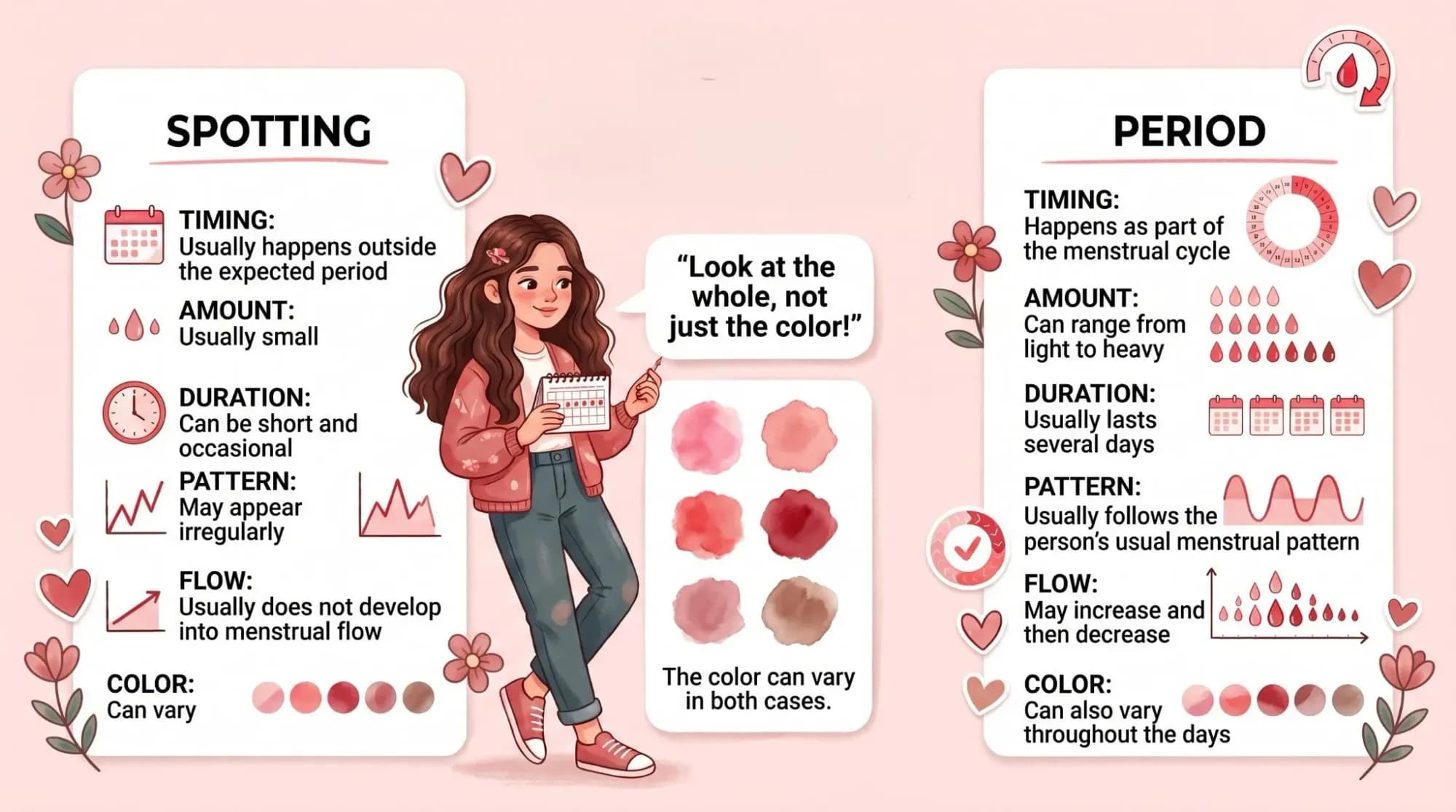
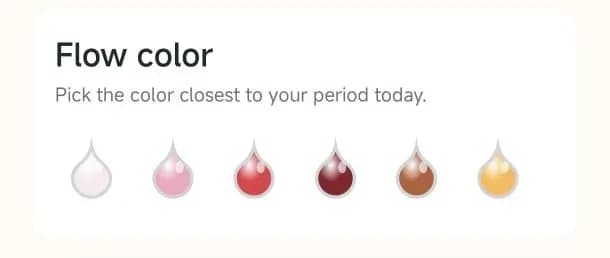
The color of the blood can change throughout the cycle and is not enough to identify the source of the bleeding. In Soso, girls can track the intensity of their menstrual flow. This helps turn what may have once felt like just a personal observation into a record they can review and follow throughout their cycles.
For example, imagine that your daughter finds a small spot of blood in her underwear on a day when she was not expecting her period. After that, no more blood appears. In this case, it could have been spotting.
Now, if that small amount of bleeding continues and turns into the flow she recognizes as her period, it may simply have been the beginning of her menstrual period.
That is why, sometimes, waiting a little and observing how the bleeding develops can help. We do not need to have a definitive answer in the very first minute.
In Soso, she can track spotting separately from her period, creating a record that can help her notice patterns over time.
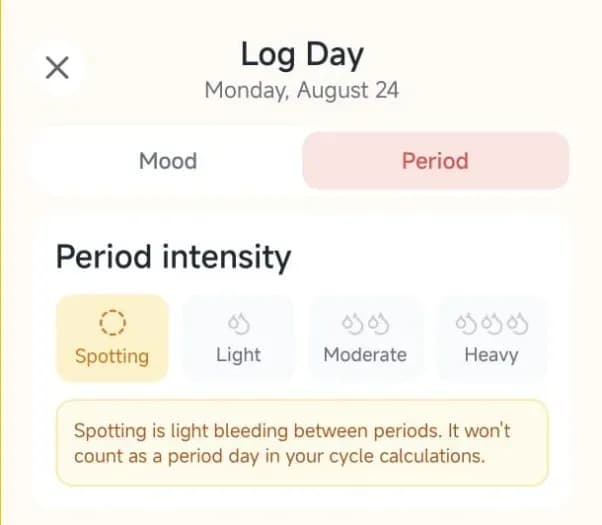
That way, the question that started with “Is this my period?” can become useful information for understanding and tracking her body. Instead of trying to remember when it happened, how long it lasted, or whether it happened again, she can record it directly in the app.
READ MORE | Is this normal? A guide for girls through their first year of menstruation
What if the girl has not had her first period yet?
If your daughter has not had her first period yet and notices a small spot of blood, it is completely natural to think: “Is this it?”
After all, she does not have a previous experience to compare it with, and you may not know exactly what her first bleeding episode will look like either.
A small amount of bleeding alone is not enough to confirm that it was her first period. It is worth watching what happens next. Does the bleeding continue? Does it increase? Does it disappear? Does it come back? These details can help you understand the pattern better.
And more important than trying to figure everything out immediately is talking to her. You can ask how she is feeling, whether she noticed any pain or other symptoms, and explain that there is nothing wrong with having questions.
If it really is her first period, let it be a calm discovery. If it is not, that is okay too. Her body does not have to follow a perfect script.
When is it important to talk to a healthcare professional?
Now, a mother-to-mother conversation: being supportive also means knowing when it is time to seek help. Many questions can start with careful observation, but some types of bleeding should be evaluated by a healthcare professional.
Very heavy, persistent, or recurring bleeding deserves attention. The same applies when bleeding is accompanied by other significant symptoms or when there is a major change in the girl’s usual menstrual pattern.
During adolescence, it is also important to pay attention when menstrual flow is unusually heavy. Very heavy menstrual bleeding can be associated with different conditions and, in some cases, can contribute to iron deficiency and anemia.
So, if something is genuinely worrying you, talk to a healthcare professional.
The most important thing is for your daughter to know she can talk to you
If I could leave you with just one thing from this article, it would be this: your daughter does not have to figure everything out by herself.
She may not know how to explain what is happening. She may feel embarrassed to ask. She may look at a small stain in her underwear and think that something is wrong. And it is precisely in these little moments that our presence makes a difference.
You do not need to have all the answers. You can say, “I don’t know, but we can figure it out together.” You can start a conversation. You can teach your daughter to observe her own body and show her that menstruation is nothing to be ashamed of.
At Soso, we believe that getting to know your own body can be a lighter experience.
That is why the app was designed to support girls through this discovery, allowing them to track their cycle, symptoms, mood, and other changes in their bodies in a supportive way that is appropriate for this stage of life.
Want to help your daughter better understand her own body? Discover Soso and find a lighter way to track her cycle, symptoms, and feelings.
Important: This content is for educational purposes only and does not replace medical evaluation. If your daughter experiences very heavy, persistent, recurring bleeding or bleeding accompanied by significant symptoms, seek guidance from a healthcare professional.
Frequently asked questions about spotting and periods
Can spotting be red?
Yes. Spotting can have different shades, including red, pink, or brown. That is why color alone is not enough to tell whether the blood is spotting or menstrual bleeding. It is better to also consider the amount, when it appeared, and how the bleeding developed.
How long does spotting last?
Spotting is usually light and may last for a short time, but there is no single duration that applies to everyone. If it continues, becomes heavy, or starts happening repeatedly, it is important to talk to a healthcare professional to investigate what may be causing the bleeding.
Is spotting normal?
It can happen in different situations and does not always mean there is a problem. Hormonal changes and the use of certain contraceptive methods are among the possible causes. However, persistent, heavy, or recurring bleeding should be evaluated so its cause can be understood.
Can spotting be the first period?
It can be difficult to know based only on the first spot of blood. If the bleeding continues and develops into a flow over the following days, it may be the beginning of the period. If it disappears quickly, it may be intermenstrual bleeding. The most important thing is to observe how it develops and talk with the girl about what she is noticing.
What is the difference between spotting and a period?
The main difference is the pattern of the bleeding. Spotting is usually a small amount of bleeding that occurs outside the expected menstrual period, while a period is part of the menstrual cycle and generally involves flow that continues for several days. The amount, timing, and progression are more useful than color alone.
Comments (0)

Veronica Tarsitano is a nursing student and a Brazilian living in Portugal. Married and a mother of three, including the girl who inspired the name "Sosô". She writes based on the real-life experience of closely following a daughter's first period, without filters.
Download the Soso app and put this into practice
Download the appRelated Posts
Headaches in pre-adolescence: when hormones might be to blame
Hormonal changes during puberty and throughout the menstrual cycle can contribute to headaches in some girls, but there are other possible causes too.
My friends have already gotten their periods and I haven't. Is something wrong with me?
Your friends have already gotten their periods and you're still waiting? Take a breath. I'm Soso's Mom, and I'm here to tell you what might be happening with your body.

Period cramps or stomachache? How to tell the difference and help during early adolescence
Your daughter has a stomachache and you are not sure whether it is menstrual cramps? Learn how to recognize the signs and help your daughter understand her body without fear or drama.